
Recovering the craft
The word economy (from the Greek oikonomia) originally meant caring for the home.
The conventional economy has often treated the home like a mine: it has extracted more value than it returned to the living systems that sustain it.
The response of recent decades has been learning to reduce the harm, learning to sustain. Today, the regenerative economy goes a step further and recovers the whole craft: caring for the home and creating the conditions for it to gain vitality, with communities more alive and more capable, more robust local economies, healthier ecosystems.
A broad umbrella. Any entity (professionals, companies, communities or institutions) committed to generating a positive impact on the territory, the people and the ecosystems it relates to belongs here.
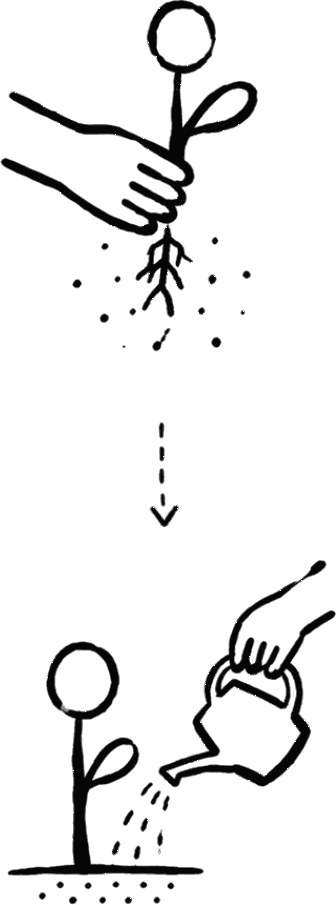
Four levels of work, one direction
Every organization does work at four levels. The first two (operate and maintain) sustain what already exists; the next two (improve and regenerate) unfold what could come to be. The fourth, regenerate, gives direction to the other three.
The same bakery illustrates all four levels:
Existence — sustaining what already is
Operate
Doing the daily work well: efficiency, fewer inputs, lower costs.
 The bakery tunes its oven and saves energy.
Maintain
Sustaining what works through the shocks: resilience and continuity.
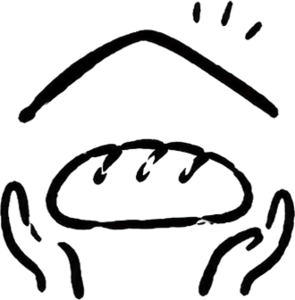 It secures succession and weathers a hard year.
Potential — unfolding what could be
Improve
Growing the value-adding capacity of people and systems.
 It trains the team and betters the bread.
Regenerate
Activating the potential of the whole: organization and territory evolving together.
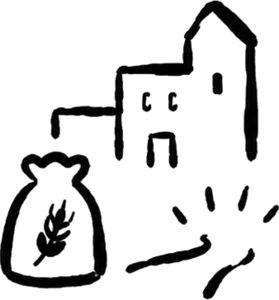 It buys county grain, recovers local varieties and brings the street back to life.
Every organization works at all four levels at once; the question is which of them gives meaning and direction to the others.
Source: levels-of-work framework by Charles Krone · fig. B.2 of Regenerative Development and Design (Mang & Haggard, Regenesis, Wiley 2016).
Three circles that feed each other
Every project lives within a place: the living system it relates to every day (a neighbourhood or a county, but also a professional community or a field of knowledge) which in turn forms part of a wider whole. A project unfolds its potential when it helps the place that hosts it make the contribution only that place can make to the greater whole; and the place, as it grows, returns vitality to the project.
For example, the bakery that buys its grain from the county helps the county become strong at what it does well; and the stronger it gets, the better the bakery does. Or a cooperative that makes free software for the whole world: its place is the community that uses and improves it, and the more capable that community becomes, the further the software reaches.
The relationship flows both ways: the health of each level feeds the health of the others.
The four premises for working regeneratively
Regenerative development, the practice shaped by the Regenesis Institute and extended worldwide over the past thirty years, orders the work through these four premises.
Every project starts from the potential held by the place that hosts it. A project inherits the history, the people and the dynamics of the place it is immersed in: that is what makes two comparable projects yield different results depending on where they take root, and what makes the same place open up different paths depending on the uniqueness each initiative brings to it. That is why the first task, always, is to understand in depth the place where we will work and read what wants to be born there.
In practice Before designing anything, listen to your surroundings: what is there, what is missing, what it could give. And change the opening question: "what could we become?" opens more roads than "what is failing?".
The goal of a regenerative project is to build regenerative capacity and leave it rooted in the territory: people, bonds and know-how that keep doing their work once the project ends. And the most valuable capacity is the one that grows what each organization and each territory can offer like nobody else: their unique contribution to the whole.
In practice List what your organization does like nobody else, put it at the service of your territory, and measure success this way too: when the project ends, how many new things will the people involved know how to do, and what bonds will remain?
Regeneration happens by moving from builder to gardener: accompanying living processes rather than directing them, within a space where people feel part of what is being done, create in it and take responsibility for it. It advances through mutualism: alliances among diverse parties (those who supply and those who buy, neighbours, institutions) that strengthen one another around a shared purpose and join project, community and place as co-creators: it is intercooperation, raised to the scale of the territory. Within that space of care, diversity and disagreement become assets.
In practice Ask who else should be at the table; and in every agreement, make sure every party gains — the place included.
Every living system carries within it the possibility of moving to new levels of order and complexity: that is the direction, the star that tells you where you are going and why, and the reference point you return to when things go wrong. Every place calls for a contribution of its own, its vocation, and aiming at it is what gives meaning to the four levels of work: the bakery that aims to "sell more bread" makes different decisions from the bakery that aims for "the county to know how to make good bread, and its fields to be healthy so that good grain grows there for generations". A plan says what will be done; the direction says why, and it holds when the plan changes.
In practice Write your project’s north star in a single sentence, and return to it at every important decision.
The four premises are the four points of the regenerative development tetrad (Regenesis; Mang & Reed): ground, goal, instrument and direction. The naming is a reading of our own.
“Regenerative development provides a context and guide for understanding the multiplicity of sustainability approaches as a coherent phenomenon that is genuinely capable of matching the complexity of today’s global issues.”
Pamela Mang & Ben Haggard, Regenesis — Regenerative Development and Design (Wiley, 2016)
There’s a place for you
Cooperative, company, community or administration: if you want to regenerate your place, this ecosystem is yours.
kosmos.coop is the digital infrastructure that makes it workable: it connects organizations, initiatives and needs so that regenerative intercooperation becomes everyday practice.
Join the ecosystem